
THE NOVA CREATRIX VIEW · 05 OF 05

Why Different Industries Need Different AI Architectures

Why the same model can require very different architectures in different workflows.

One of the easiest mistakes to make in enterprise AI is to assume that the same architecture should work everywhere.

A hospital, a software company, an automotive manufacturer and a professional services firm may all use AI for writing, search, summarization, analysis and recommendation. But the information being handled, the consequences of being wrong, the amount of cognition required and the rules governing how information can move can be completely different.

Industry is the first filter. Workflow is the final one.

Start with information movement

What information is allowed to cross which boundary, under what controls, for what purpose?
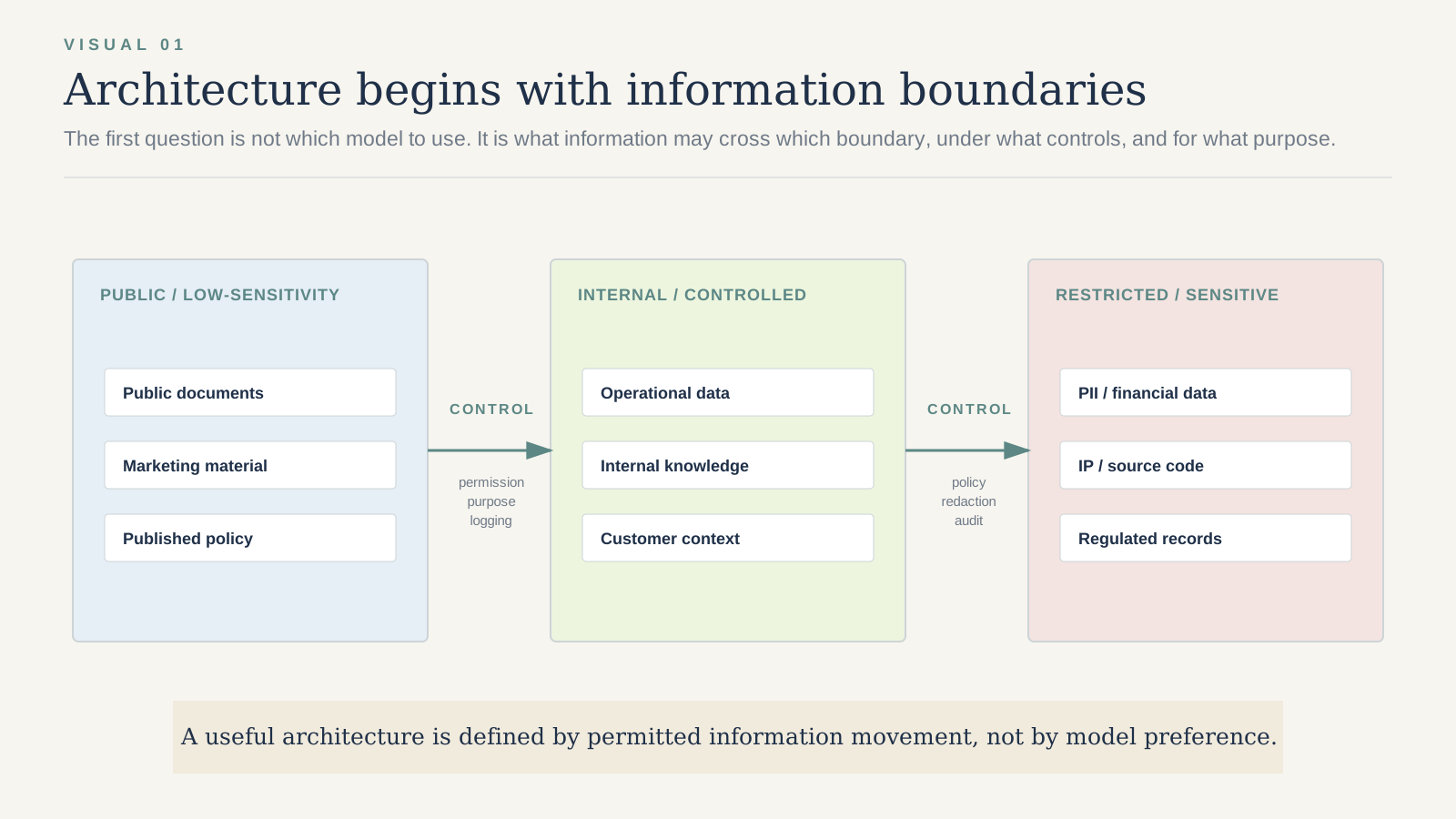
Diagram showing public, internal and restricted information zones with controls governing how information may move between them.
VISUAL 01 · INFORMATION BOUNDARIES
Diagram showing public, internal and restricted information zones with controls governing how information may move between them.

VISUAL 01 · INFORMATION BOUNDARIES

The organization provides governed truth

A general model can probably produce a sensible policy. That does not mean it knows the company’s policy. The organization’s approved policy must remain the source of truth.

The model provides general cognitive capability. The organization provides governed truth.
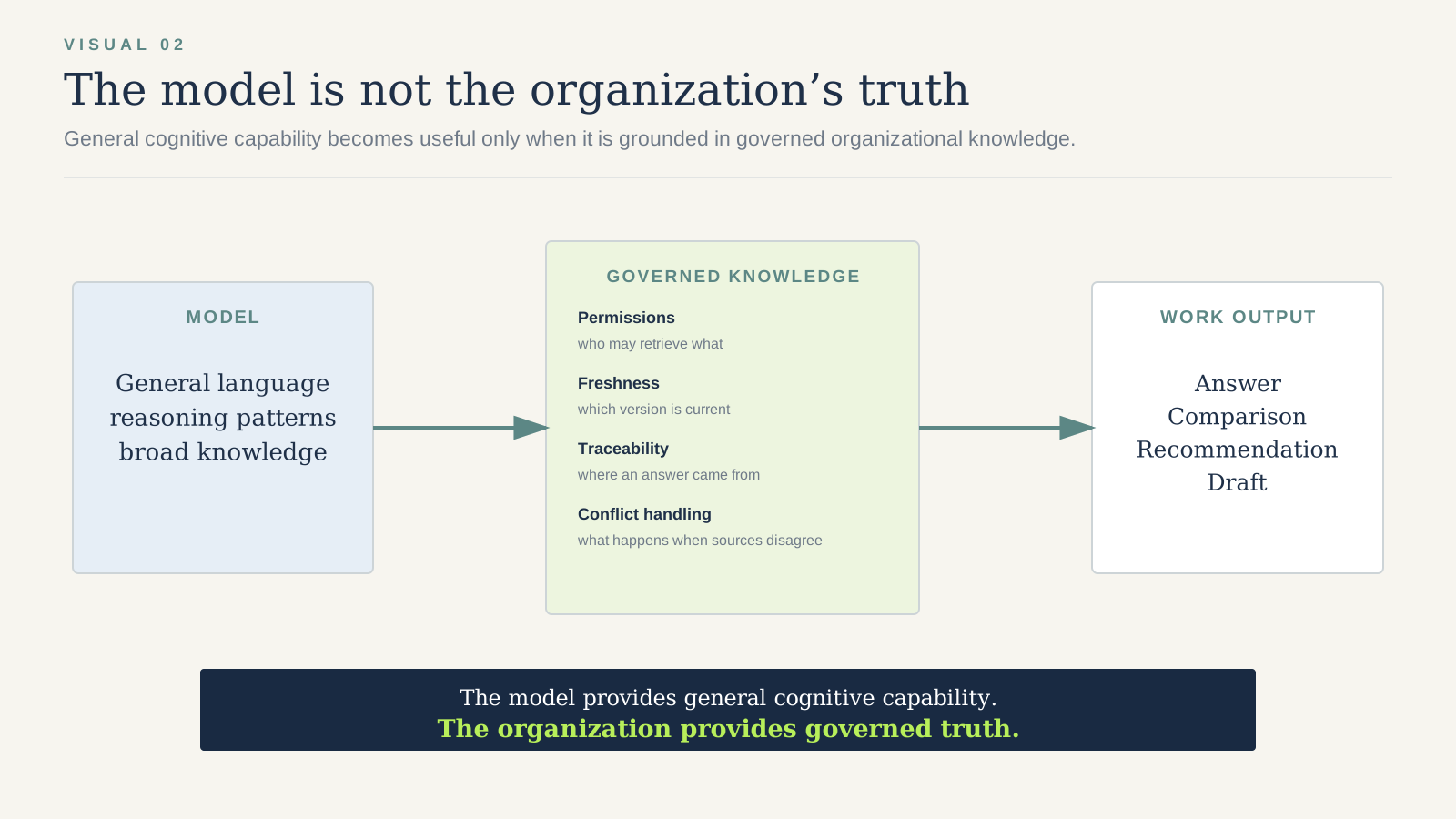
Diagram showing a general-purpose AI model grounded by governed organizational knowledge with permissions, freshness, traceability and conflict handling before producing work output.
VISUAL 02 · GOVERNED TRUTH
Diagram showing a general-purpose AI model grounded by governed organizational knowledge with permissions, freshness, traceability and conflict handling before producing work output.

VISUAL 02 · GOVERNED TRUTH

Use only as much intelligence as the task requires

The strongest model is not automatically the right architecture.

A senior engineer asking AI to analyse one difficult failure every fortnight has a different cost structure from a production workflow classifying 100,000 records.
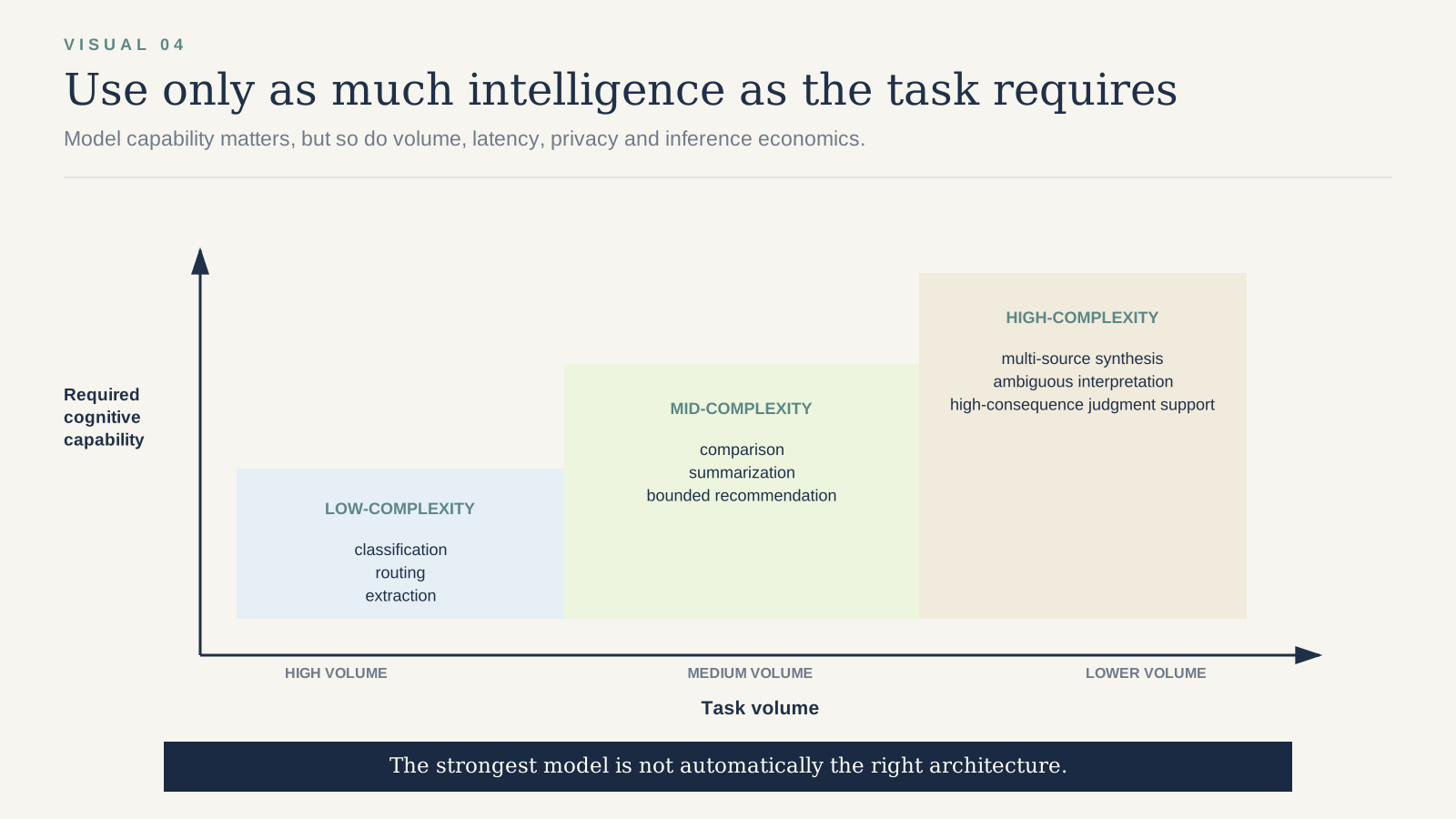
Diagram showing how required cognitive capability and task volume influence the appropriate level of model sophistication and economic design.
VISUAL 04 · CAPABILITY VS ECONOMICS
Diagram showing how required cognitive capability and task volume influence the appropriate level of model sophistication and economic design.

VISUAL 04 · CAPABILITY VS ECONOMICS

Design from business conditions outward

Business objective → information sensitivity → compliance and control → organizational knowledge → cognitive complexity → volume → consequence → architecture.
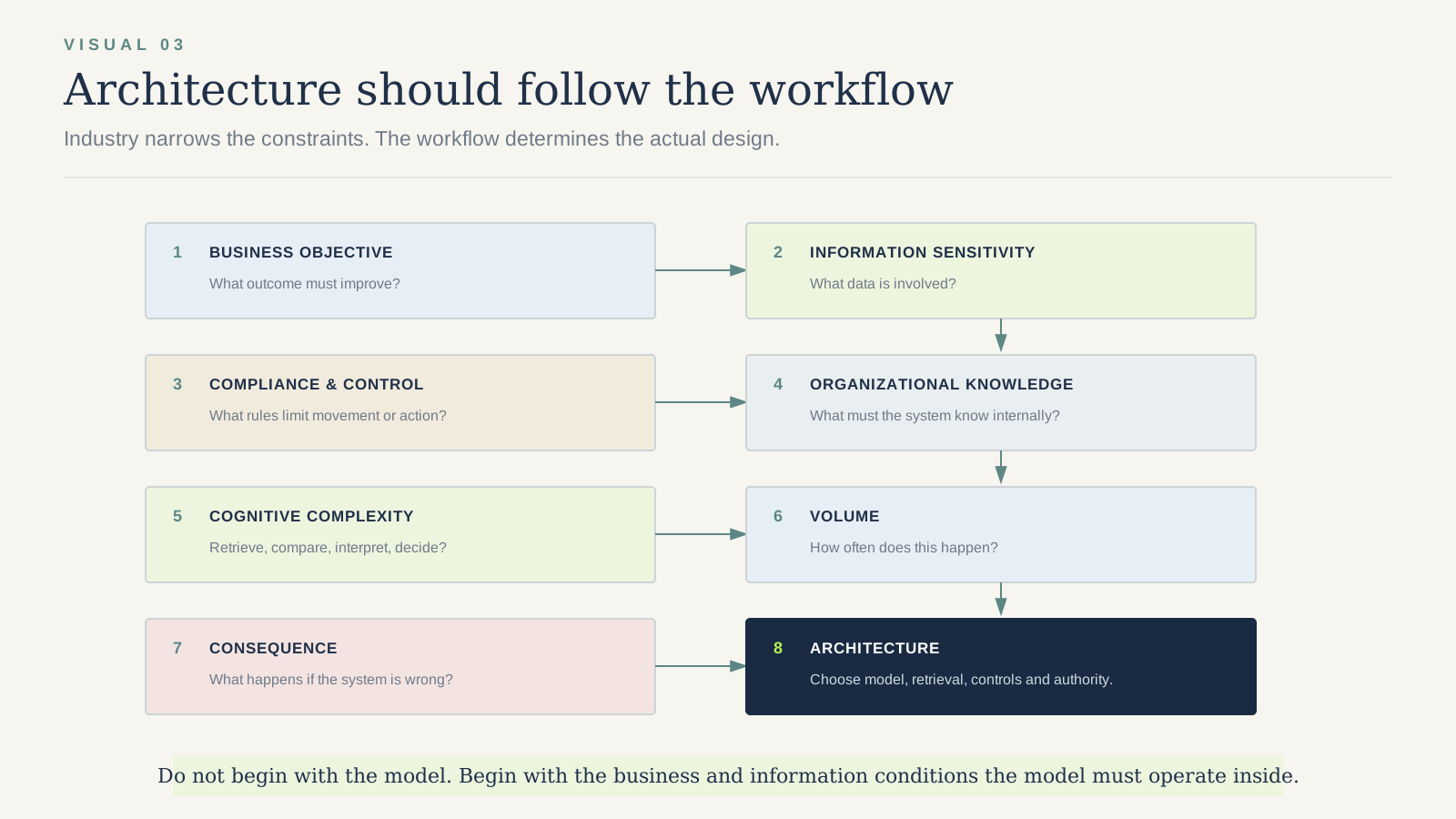
Sequence showing how business objectives, information sensitivity, control requirements, organizational knowledge, cognitive complexity, volume and consequence lead to an AI architecture.
VISUAL 03 · FROM BUSINESS OBJECTIVE TO ARCHITECTURE
Sequence showing how business objectives, information sensitivity, control requirements, organizational knowledge, cognitive complexity, volume and consequence lead to an AI architecture.

VISUAL 03 · FROM BUSINESS OBJECTIVE TO ARCHITECTURE

The architecture should follow the business.

FROM THE NOVA CREATRIX VIEW

From thinking to application.

Explore applied workflows and diagnostics from the Nova Creatrix View.

Explore resources Back to The Nova Creatrix View