
Sometimes, it is cheaper to give a customer more than they need.
That sounds strange until you look at the organization around the product.
I once worked with high-voltage equipment that had to operate under different seismic requirements. In theory, the product could have been designed in multiple variants.
On paper, that sounds efficient. Why put more material into a product than the customer requires?
But every additional variant created work somewhere else.
Sourcing had another specification to manage. Planning had another demand pattern to forecast. ERP structures had to represent it. Stores had to hold it. Production had to distinguish it. Sales had to understand which configuration belonged where.
So the physically cheaper product could create a more expensive organization.
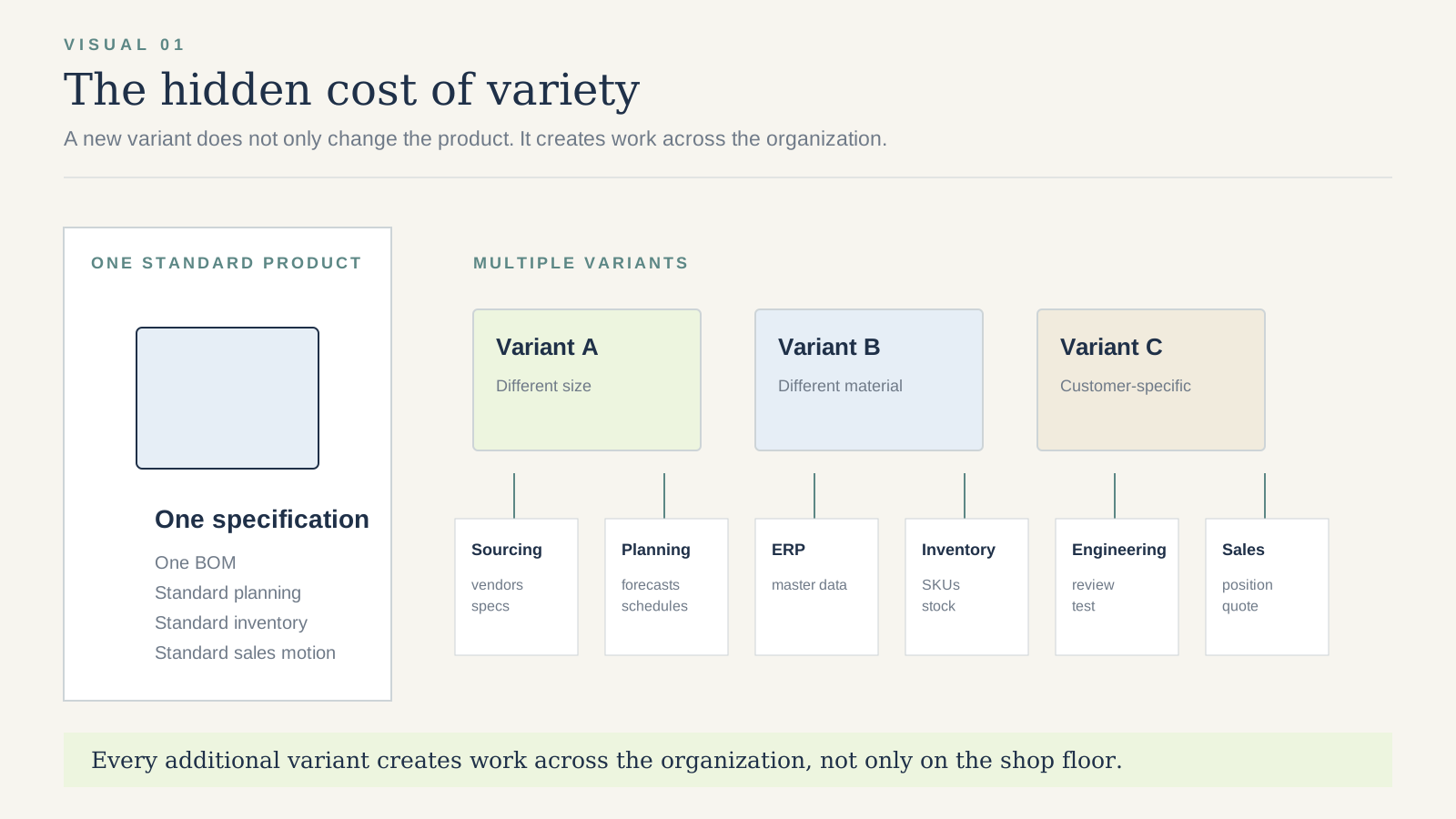
Variation is rarely contained inside the product. It is carried by the organization around it.
VARIATION
Variation has a cost outside the product
The cost of variety is not only the cost of producing the variant.
There is coordination cost.
There is uncertainty.
There is the cost of keeping information aligned.
And there is the opportunity cost of scarce expert attention.
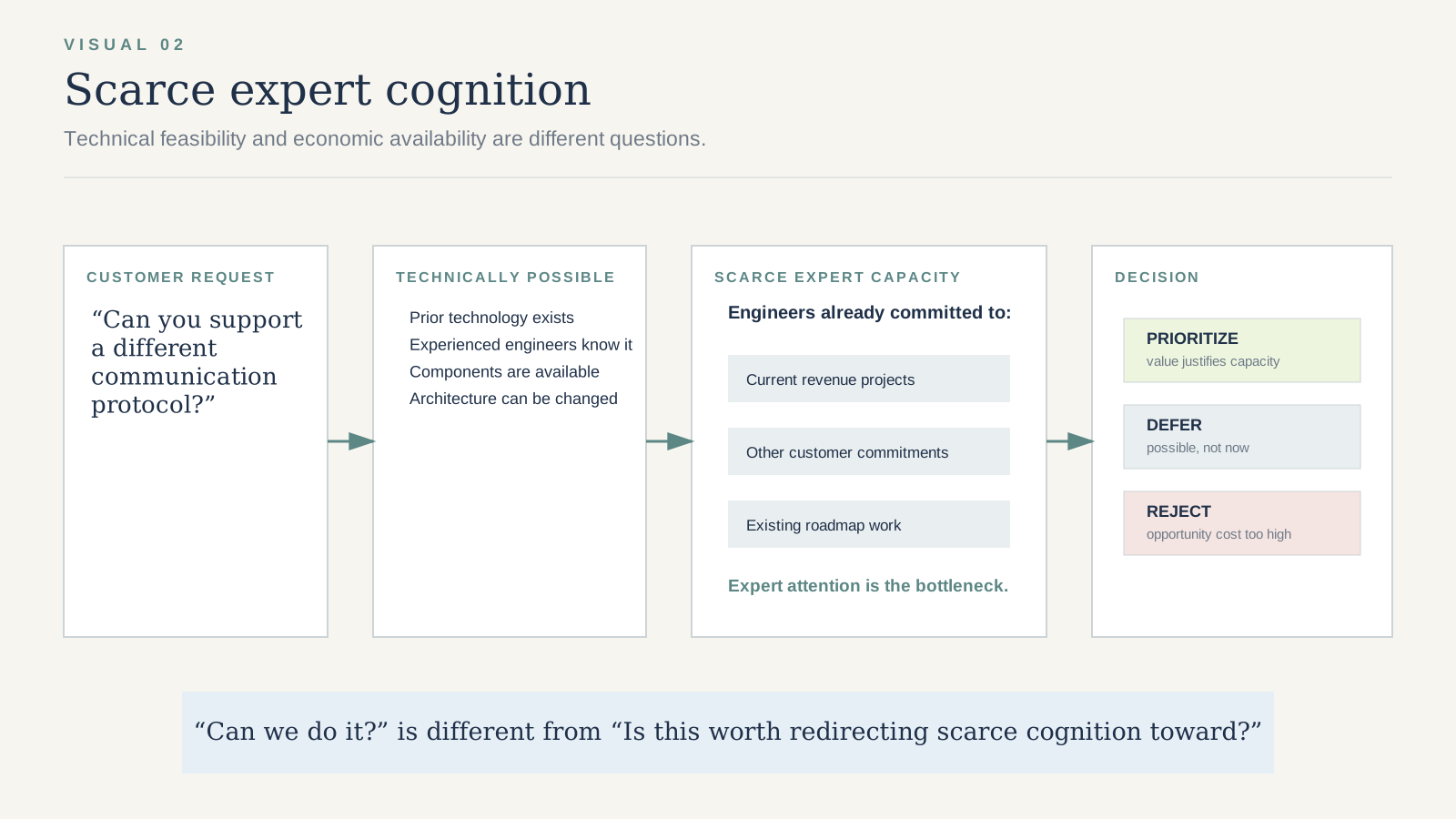
I saw another version of this when a large engineering customer requested a communication protocol outside the standard product architecture.
The requirement was technically possible. Some engineers had worked with similar technology before.
But those engineers were already occupied with projects critical to current revenue.
The question therefore was not simply:
Can we do it?
It was:
Is this order valuable enough to justify redirecting scarce engineering cognition toward it?
ECONOMIC BOUNDARY
AI can move the boundary without eliminating it
If AI reduces the time required to retrieve prior engineering work, understand an unfamiliar code base, compare specifications, prepare a test plan, classify exceptions or explore alternative designs, then the cost of investigating a variant can fall.
That does not mean the company should accept every customization.
It means that some opportunities which were previously uneconomic to even explore may become worth evaluating.
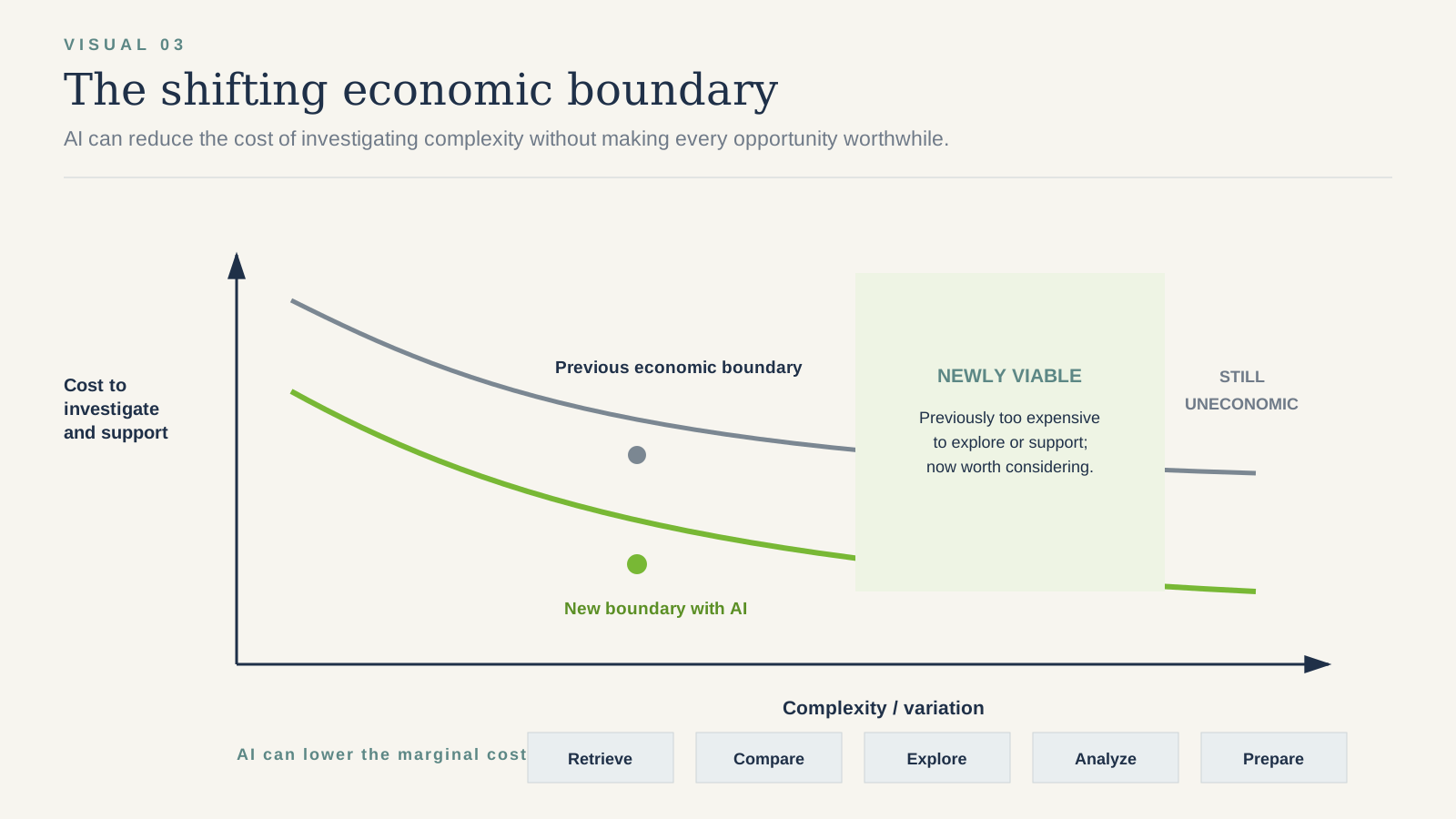
The argument is not that cognition suddenly becomes free.
It is that the marginal cost of particular cognitive activities can fall enough to change a boundary decision.
CAPACITY
Released capacity can be used in different ways
The first consequence may simply be efficiency.
The same work is done with fewer corrections, less searching, faster preparation or lower coordination cost.
But that released capacity can be used in several ways.
A company may increase throughput.
It may accommodate more variants.
It may serve additional customers with the same organizational capacity.
It may enter an adjacent market.
Or it may simply protect margins while prices fall.
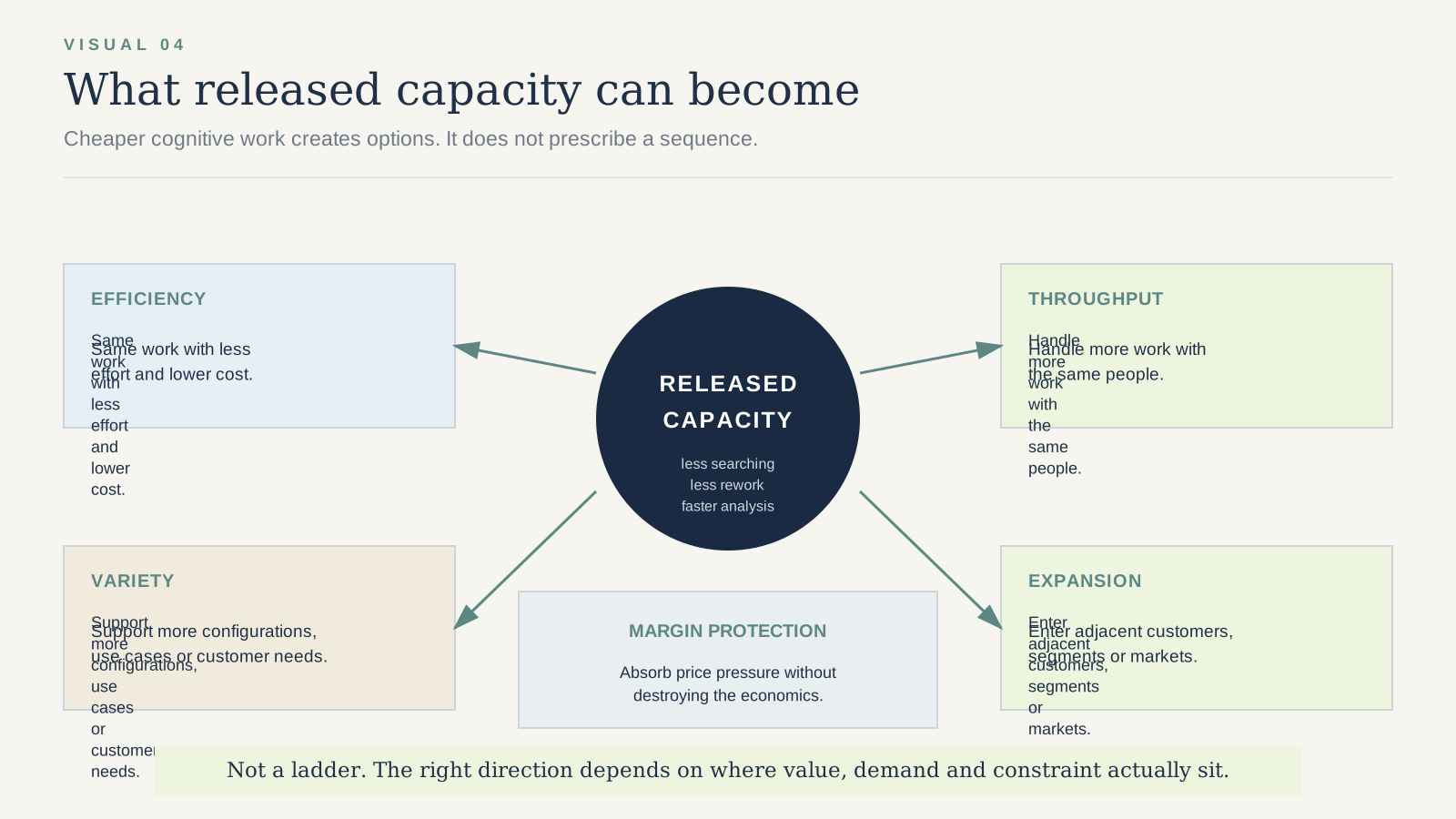
There is a tempting progression here:
Efficiency → Throughput → Variety → Expansion
But businesses rarely move through it neatly.
A saturated market may have little use for additional throughput. A government supplier may become operationally more efficient while the tender cycle remains exactly as slow as before. A company already selling to most of the available customers may create more value by increasing the range of problems it solves for those customers.
DIRECTION
Cheaper execution does not choose direction
If cognition becomes cheaper, more possibilities can become economically accessible.
But the organization still has to decide which possibility deserves the capacity.
Should the company become more efficient?
Should it serve more customers?
Should it support more variety?
Should it enter another market?
Should it use the capacity simply to remain competitive at lower prices?
The answer depends on where the company currently makes money, where constraints actually sit, how the market is changing and what the organization is trying to become.
Cheaper cognition creates more possibilities. It does not choose between them.
And once several companies gain access to similar improvements, another question becomes unavoidable:
What does it mean to keep up when the environment around the business is changing too?